The most valuable knowledge in the manufacturing sector is often the hardest to document. Long-serving experts know which equipment tends to break and how to fix it when it does. They understand the customer quirks, the complex product catalogs and the exceptions to every rule in the employee handbook. Over time, this becomes information that everyone at the company “just knows,” and is passed on through conversation and hands-on instruction.
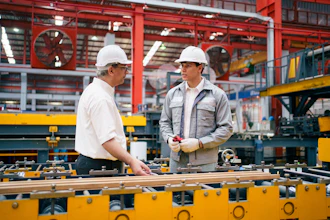
This approach mostly works when there are plenty of senior employees to show their junior colleagues the ropes. But without those experienced workers, the system breaks down. The challenge is becoming more urgent as manufacturers grapple with an aging field service workforce.
When they retire, much of their hard-earned institutional knowledge will go with them. Younger, less experienced workers may have the right technical skills, but they won’t know how a company’s systems, products, customers and processes actually work together.
To preserve the context that keeps a business running, leaders can lean on AI systems to turn individual expertise into an organizational resource.
AI Changes the Preservation of Expertise
Traditional approaches to knowledge management aren't good at capturing how experienced staff members solve problems in real life. On top of that, most employees would rather do their day-to-day work than write up highly detailed documentation on how they do it. Still, manufacturing companies need tools that cover both the written and unwritten rules. That’s where AI comes in.
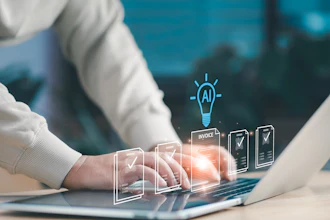
AI models can ingest vast amounts of data from disparate sources and assemble them all into a single source of truth. From structured data like databases and spreadsheets, to unstructured data like emails, blueprints or even recorded conversations, AI can parse just about any digital file and draw connections between relevant pieces of information.
In fact, one big advantage of AI models is that you don’t have to sit down and type in everything you need to know manually – most manufacturing companies have already accumulated decades of valuable knowledge across their existing systems and content. In addition to databases and text documents, AI can also extract useful information from emails, Slack conversations, Zoom recordings, audio memos, photos, diagrams and almost anything else with words, pictures or audio.
Once you upload this information, the AI model can handle the rest, creating a digital knowledge base that anyone in your organization can access.
Instead of being locked inside a veteran technician’s head, specific expertise is suddenly available to the whole company. Teams can share best practices and new ideas across departments, working more efficiently and making unexpected discoveries. Best of all, a company’s knowledge base doesn’t shrink whenever a worker leaves, but grows and builds on itself constantly.
A Better Way Forward
Imagine a new employee at a manufacturing firm needs to calibrate a temperamental machine. Instead of tracking down a senior technician or searching through multiple systems, they simply ask a question in natural language. In seconds, they receive the relevant procedures, equipment documentation, troubleshooting guidance and lessons learned from experienced colleagues – all in one place.
This reflects a broader shift in how employees access information. Instead of relying on exact keywords, document titles or part numbers, workers can search conversationally, describing what they're trying to accomplish rather than guessing how information was filed. Modern AI understands intent and connects people with the most relevant knowledge across enterprise systems.
The result is that employees no longer have to rediscover what the business already knows. New hires get to useful answers faster, in the flow of work, while experienced employees spend less time answering the same questions repeatedly. Organizations preserve hard-earned expertise, accelerate learning and enable more consistent execution as knowledge scales with the business.
Turning Expertise into Operational Advantage
From personal experience, I can say that when manufacturers use AI to preserve institutional knowledge, the pressure on management starts to ease up almost immediately. Onboarding gets easier. Employees resolve problems faster. Bottlenecks clear up. Outputs become more consistent. Productivity improves overall.
I've worked with manufacturers and distributors where employees had to navigate enormous product catalogs, technical documentation and disconnected business systems. The knowledge already existed, it was simply difficult to find.
By bringing that information together and enabling employees to search it conversationally, organizations reduced the time spent looking for answers and increased the time spent on higher-value work. Just as importantly, expertise became available to everyone, rather than remaining concentrated in a handful of overworked experts.
Based on current trends, manufacturing is set to undergo a massive retirement wave within the next few years, and there may not be enough incoming workers to replace the outgoing ones. New hires will have to get the work done with fewer institutional resources and less mentorship. Businesses can’t do much to change that. What they can do is rethink how they preserve and share the expertise that veteran employees have built up over decades of hard work.
With AI, manufacturers can activate the institutional knowledge that's already spread across documents, systems and people. Expertise becomes a shared resource, available to any employee at any time. Over the next decade, success in the manufacturing sphere will not come from hiring the most experienced people, but from sharing that experience as effectively as possible.