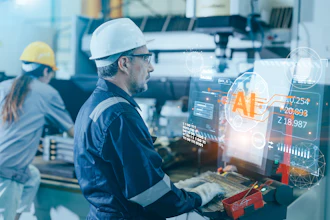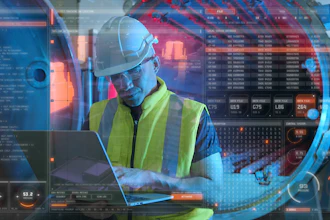
Siemens has achieved a major breakthrough in AI-driven manufacturing at its Erlangen plant through a partnership with NVIDIA, reducing engineering effort by up to 85 percent and cutting time-to-market by up to 40 percent using AI and digital twin technology.
- 85% engineering reduction: Virtual production preparation for PCB assemblies eliminates weeks of manual prototype testing by using AI-generated photorealistic representations to train vision systems
- 40% faster time-to-market: AI and digital twins accelerate production ramp-up and enable quality inspection preparation before physical prototypes are available
- 20% cost savings: AI agents support production planning by automatically generating scenarios and optimizing capacity, material availability, and delivery dates based on defined KPIs
- 100+ AI algorithms: The Erlangen facility already deploys more than 100 active AI algorithms across production, logistics, quality inspection and maintenance operations
- €500 million investment: Siemens is investing approximately $560 million USD through 2030 to expand the facility and scale AI manufacturing capabilities across industries
Siemens has unveiled new AI solutions at its electronics factory in Erlangen, Germany, marking a new milestone in its partnership with NVIDIA to advance AI-driven, autonomous manufacturing.
The applications that are currently unique in the manufacturing industry use AI and digital twins to accelerate production ramp-up and enable more adaptive production planning.
At CES 2026, both companies said they would build the world’s first fully AI-powered manufacturing sites. Since then, both companies have co-developed and tested applications in live production at the Erlangen plant.
Erlangen serves as a living lab for industrial AI and a blueprint for scaling these capabilities across industries. Siemens and NVIDIA aim to make artificial intelligence the operating system of manufacturing, transforming how products are designed, manufactured and delivered across the entire value chain. Further applications are planned in the coming months.
The joint Siemens and NVIDIA team developed the first new AI offerings in less than ten months, combining NVIDIA’s AI, simulation and accelerated computing technologies with Siemens’ industrial software, automation and manufacturing expertise.
Testing the solutions directly in a production environment enabled the teams to develop solutions around real manufacturing requirements. These new technologies can deliver unprecedented improvements in areas such as production planning and product development.
For new printed circuit board (PCB) assemblies—the core of the drives and frequency converters manufactured in Erlangen—virtual production preparation can reduce engineering effort by up to 85 percent and cut time-to-market by up to 40 percent.
The workflow addresses a critical bottleneck: preparing quality inspection previously took several weeks, because teams had to wait for physical prototypes to train vision systems and manually configure inspection equipment. AI now generates photorealistic representations of PCB assemblies from their digital twins to train the vision systems, enabling engineers to prepare inspection before physical prototypes are available.
 Automated guided vehicles optimize material flow and logistics across the factory floor. Siemens
In the plant’s production planning, new AI technologies also promise to master the balancing act between capacity, material availability, delivery dates and production lines much faster and more efficiently. Previously, planners weighed various factors against each other based on their experience to make the best possible decision. In Erlangen, an AI agent now supports this process.
When new orders arrive, it automatically generates various production scenarios and shows planners the impact of each option based on defined KPIs. Before implementation, planners validate these proposals using a digital twin of the entire production facility. This end-to-end agent-based production planning can enable cost savings of up to 20 percent, while allowing manufacturing operations to respond more flexibly to new orders, material shortages or shifting customer requirements.
These advances combine Siemens’ industrial software and manufacturing expertise with NVIDIA technologies. NVIDIA Cosmos world models generate realistic training data for quality inspection. The NVIDIA Factory Operations Blueprint supports AI agents that create production plans and help factories respond to changing production needs. At the same time, NVIDIA Omniverse libraries enable teams to test those plans virtually using real factory data.
Established in 1971, the Siemens Erlangen plant in Southern Germany employs approximately 1,000 people. It manufactures power electronics and automation technology for industry and infrastructure, including machine tools, battery production and the process and discrete manufacturing industries. For more than a decade, the site has tested, developed and deployed new digital manufacturing technologies during live operations.
Currently, more than 100 AI algorithms are already in active use across production, logistics, quality inspection and maintenance. The location is set for further expansion through 2030, with Siemens investing €500 million (~$560 million USD) in the transformation.
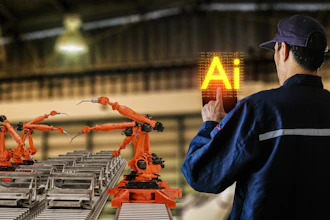
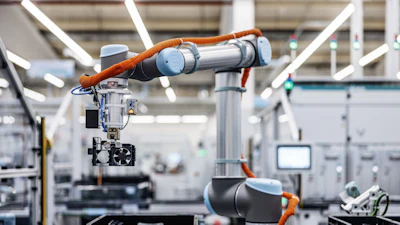
 A fully automated production line at the Siemens electronics factory in Erlangen, Germany.Siemens