The U.S. Department of Justice announced that a federal jury convicted Ji Wang, 63, of Painted Post, New York, of stealing sensitive defense research from a DARPA project.
The conviction includes two counts of economic espionage, one count of theft of trade secrets, one count of attempted economic espionage and one count of attempted theft of trade secrets.
Wang, a Chinese native, immigrated to the U.S. in 1998 to work for glass, ceramics and concrete manufacturer Corning Incorporated. Between 2002 and 2007, the company assigned him to work on a joint research and development project partially funded by DARPA.
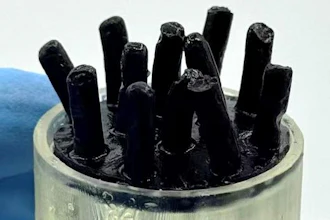
The five-year, $11.4 million project sought to develop optical fibers for high-powered lasers with military and commercial applications. DARPA and Corning aimed to increase the power of fiber lasers by more than a factor of 1,000. DARPA planned to develop this technology to create laser weapons capable of shooting down drones and missiles.
On or about July 1, 2016, Wang stole hundreds of files that contained non-public data generated during the DARPA project, including trade-secret manufacturing technology that would have enabled him to fabricate all manner of specialty optical fibers, including for fiber lasers.
Ten days before Wang stole the trade secret files, he had applied for China’s Thousand Talents Plan Award, an initiative by the Chinese government aimed at people who were born in China and immigrated to the U.S. to study or work in science and technology fields.
The award incentivized these people to return to China by promising millions of dollars of investment. Two months after Wang stole the trade secret files, he was selected to receive a Thousand Talents Plan Award.
Wang was negotiating with Chinese government entities to start a specialty fiber business in China from at least 2014 through 2017. He also negotiated to receive tens of millions of dollars in investment from Chinese government entities, who would have been shareholders in his new venture.
The business plans showed that he was planning to use the stolen trade-secret files to start this business in China and touted the military applications of the technology.
In one portion, which Wang submitted to a Chinese government entity, he advertised that specialty fibers "can also be installed on military vehicles,” including "tanks.” He claimed that such use of the technology on military vehicles could "be key to deciding victory or defeat.”
Ultimately, law enforcement disrupted Wang’s efforts before he was able to start a new business and exploit the technology he stole.
Economic espionage carries a maximum penalty of 15 years in prison and theft of trade secrets carries a maximum sentence of 10 years in prison. Sentencing is scheduled for April 15, 2026.