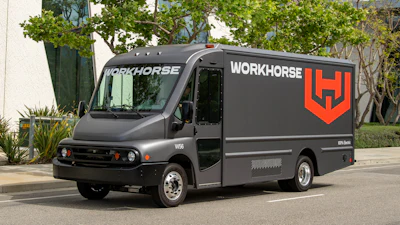
Four years ago, Workhorse Group's Union City, Indiana, manufacturing facility was mid-transition — retrofitting a plant that had built internal combustion engine vehicles into one producing all-electric step vans and other vehicles for commercial fleets. It was a clean slate, which made it a rare opportunity: the chance to build lean manufacturing principles into the operation from the ground up.
What follows is an account of how lean has been applied here, what the results have looked like, and what the process has taught us that might be useful to others considering the journey.
The Core Principle: Right Part, Right Place, Right Time
Lean manufacturing starts with a simple premise: get the right part to the right place at the right time so operators can add value. Everything else is waste.
An early measurement brought that to light. Building a single vehicle required an estimated 5,600 walking steps, most of them were operators moving to retrieve material staged too far from the work area. No manufacturer wants to pay people to walk. By applying lean principles around material placement and moving parts closer to the point of use, we were able to immediately cut that time in half. The goal was to ensure that every moment of operator time is spent adding value to the product.
Lean methodology, specifically Harris Lean Systems — a framework developed with roots in Toyota production principles — provided the structure. The Red Book covers cell setup and continuous flow; the Blue Book focuses on learning to see flow in Value Stream Maps. Working through both, with an exceptional external sensei (Jennifer Klettheimer) assigned to the facility during the early years, gave our team a shared language and a systematic way to identify and eliminate waste.
Building It Station by Station
The right place to start a lean transformation is at the individual station level, not at the system level. Continuous flow within each station, where an operator should always add value, never waiting, never searching, is the foundation everything else rests on.
In practice, that means things like: putting shelving at knee-to-shoulder height, arranging parts left to right in the order they are installed, and using visual tool carts showing only the instruments approved by process engineering for that station. If the part doesn't fit, the answer isn't a bigger hammer, it's a process review. Station kiosks carry work instructions and standard operating procedures. Floor color coding communicates without words: green box means a production part; blue marks a tool cart or fixture, red flags non-conforming material.
When every station is built this way, the system becomes self-teaching. New associates orient faster because the station itself communicates what needs to happen. Cross-training accelerates. Uniform colors extend the same logic to personnel — maintenance, quality, and materials team members are visually identifiable from 30 to 50 feet away, without a radio call, without interrupting the flow of work.
Why Ownership (of the Process, not Executive) Determines Whether It Sticks
Every lean transformation encounters the same human reality: some people embrace it immediately, most need to see it work, and a small group won't come around regardless. The variable that determines whether the system holds is a whole-of-team inclusion and ownership.
The approach that has worked here is to bring associates directly into the design process. Training sessions mapped where flow was restricted. Those same associates then went to the floor to build the solutions like rolling point-of-use carts, tool racks, and the parts supermarket. When the people using a system help build it, they defend it. When a consultant designs it and walks away, they don't.
During workshops, rank is left at the door and input is taken from everyone. The data identifies the problem; the team designs the fix; the team implements it. That sequence: “here's the issue, here are the recommendations, here's the plan” is what creates the pride of ownership that keeps a lean system running after the training ends.
What the Process Has Taught Us
Four years in, I’d rate the operation at a solid B-plus. I believe we’re above average but not yet world-class. We’re always in motion. The biggest ongoing challenge isn't the system. It's the basics. When I walk onto the floor and find a trash can not in its labeled spot, I’m disappointed, because it signals that the foundational discipline has slipped. If a team can't maintain the basics, it can't credibly claim a quality, repeatable process. “Lean” requires continuous auditing, coaching, and recognition; not as a corrective measure, but as the mechanism by which the culture sustains itself.
For plant managers considering this work, a few principles have proven consistently true. Be humble and walk the floor. The waste that drives cost and quality problems is visible to the people doing the work every day. Your job is to create conditions for that knowledge to surface. Recognize wins as they happen; the moment a skeptic sees that lean principles work is a cultural inflection point, so don't let it pass.
 Brad Hartzell is Vice President of Manufacturing at Workhorse Group Inc.Workhorse
I’m most proud that team members in Union City can still correctly answer questions about lean concepts introduced in their earliest training. The system no longer depends on any single person to keep it moving. That's what lean manufacturing, applied consistently and owned by the people doing the work, is supposed to produce: an operation that teaches and sustains itself.
Brad Hartzell is Vice President of Manufacturing at Workhorse Group Inc. (Nasdaq: WKHS), a North American OEM producing medium-duty, all-electric step vans, shuttles, and buses at its commercial-scale manufacturing facility in Union City, Indiana.