Most executives don’t view operations leaders as salespeople. If you want smooth adoption, you should. As the co-founder of MaintainX and head of go-to-market strategies, I’ve watched manufacturers of all sizes roll out digital programs. The biggest roadblocks rarely come from the tech. They come from selling the vision to the people who decide whether it sticks.
Research backs this up. Roughly 70% of large-scale transformations miss their goals. The cause is usually people issues like buy-in, unclear communication, and change resistance, not technical flaws.
Asking technicians, line leads, controls engineers, planners, and finance to change how they work is a multi-threaded sale. Big programs have small, personal implications for every role on the floor. You cannot expect everyone to connect the dots on their own.
After helping thousands of manufacturing organizations, I see the same pattern. The winners run the best internal sale. Here are the practices I recommend for pitching the people who matter most.
From slideshows to steel-toes
Treat digital transformation like a go-to-market motion inside the plant. Reframe your audience. These aren’t just employees. They are customers, and you are selling a product. Be clear about what you’re selling and how it works. Offer demos. Close the next step. That shift moves the needle where it counts: on the line, in the crib, in the control room, and at the daily huddle.
Take a “customer” first approach
As in any sale, align your solution to your customer’s objectives. For frontline teams, that means fewer interruptions, smoother workflows, clear handoffs, the right part on the first trip, and getting home on time. If your pitch sits too high, people will guess what it means for them. Instead, be specific about how the change improves daily workflows for each group. Connect the dots. Manufacturers that integrate human change with operational change see better ROI. Technology adoption starts with people.
Show don’t tell
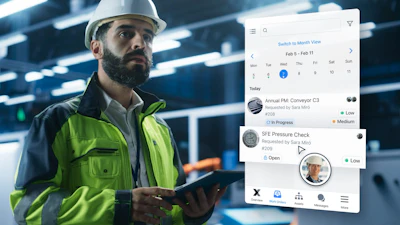
Meetings and presentations only go so far. Let people see it. Move the presentation from the conference room to the floor and show a real scenario. Walk up to a piece of equipment and create a one-tap work order. Add a quick photo step to prevent a repeat fault. Share live status updates. Pull work history and show repeat breakdowns falling on that machine. A week later, they may forget the deck. They won’t forget the demo.
Share the win
Demos turn heads. Stories close the sale. At a midwestern Tier-1 auto supplier, a maintenance supervisor started with a moment everyone understood: a tech missed their child’s soccer game hunting a torque spec on press 18. He scanned the press, launched a one-tap job with the right checklist, pointed to the live backlog visible from the line, and showed that eight weeks later repeat faults were down while PM compliance was up. The story worked because it was human and visible, not buried in a monthly packet.
Start small
Don’t sell a wholesale change on day one. Take an incremental path and use early wins to build momentum. Start with one asset, one line, one shift, or one team. Make it an experiment others can watch. Post a scoreboard where everyone will see it. Track metrics people feel today: unplanned downtime minutes on pilot assets, time from call to first touch, and the share of jobs closed with a quick photo. When people see the impact in real time, they will drive wider adoption.
Prepare for pushback
There will be advocates for the old way. Good salespeople prepare for objections. You should too. No time? Run a two-week pilot with a five-minute huddle instead of a long meeting later. Leadership wants a business case? Commit to stop if the needle does not move. Worried documentation slows the job? Use a quick photo to prevent tomorrow’s repeat faults without adding admin. Treat every objection as valid and address it with a small, on-the-floor proof and a shared scoreboard.
Digital transformation is complicated and costly. Without frontline buy-in, it is unlikely to hold. The top-down model that works for many plant initiatives often fails here because this change leans on the floor. Don’t direct people toward adoption. Inspire it. Make the change gradual. Show how it fits real operations and highlight clear, practical benefits. Treat the floor like a customer, and pitch with the understanding that success hinges on their yes.
Nick Haase is the co-founder of MaintainX.