U.S. manufacturers are facing a widening skills gap as experienced workers retire faster than new talent enters the field. At the same time, younger workers bring higher expectations for safety, cleanliness and overall working conditions. In this environment, factors once viewed primarily as compliance or maintenance issues — including indoor air quality — are increasingly shaping productivity, recruiting and retention on the factory floor.
The Workforce Impact of Poor Indoor Air Quality
Poor indoor air quality can quietly undermine workforce stability in manufacturing environments, especially at a time when skilled labor is increasingly difficult to replace. Airborne dust, fumes and particulates affect more than regulatory compliance; they influence how workers feel, how long they can perform effectively and whether they choose to stay in a job or seek work elsewhere.
Research shows that poor air quality affects the workforce in several interconnected ways:
- Reduced cognitive function and focus: Exposure to airborne pollutants is associated with headaches, eye and throat irritation, fatigue and breathing discomfort, symptoms that reduce concentration and endurance over long shifts. These effects are especially relevant in industrial environments with higher particulate loads. Even modest reductions in indoor air quality have been shown to have measurable impacts on cognitive functions such as attention, processing speed and working memory. Emerging research suggests a strong link between occupational exposure to airborne pollutants such as black carbon, weld fumes and volatile organic compounds (VOCs) and long-term cognitive health.
- Measurable productivity losses: Research has shown that poor indoor air quality can reduce worker productivity by 6% to 9% in office environments—and that’s without the specific exposures common in manufacturing settings. Increased exposure to respirable particulates in manufacturing is associated with significant decreases in worker productivity, even at levels within regulatory requirements. In production environments, even modest efficiency losses can translate into missed targets, slower throughput and higher rework rates.
- Higher absenteeism and lost work time: Studies suggest that cleaner indoor air can reduce absenteeism by as much as 35%. A peer-reviewed literature review published by the National Institutes of Health found consistent links between poor indoor air quality and increased sick leave. This includes direct impacts of illnesses related to occupational exposure to indoor air pollutants (such as metal fume fever, occupational asthma and other respiratory illnesses), as well as documented effects of indoor pollution on mental health conditions related to neuroinflammation.
- Increased strain on an already limited labor pool: According to the Manufacturing Institute, U.S. manufacturers will need to fill an estimated 3.8 million jobs by 2033, with as many as 1.9 million roles at risk of going unfilled due to retirements and a lack of new entrants. In this environment, avoidable absenteeism and turnover driven by poor working conditions carry greater operational risk.
- Recruiting challenges tied to workplace perception: Surveys from Thomasnet show that younger manufacturing workers place a high priority on safety, cleanliness and environmental conditions–values that dictate their employment choices. Facilities perceived as dusty, hazy or uncomfortable can reinforce outdated views of manufacturing and make it harder to attract new talent, even when wages and benefits are competitive. Having a safe, comfortable working environment is especially important for Gen Z workers, who tend to put a high premium on feeling respected and cared for by company leaders.
Taken together, these impacts mean poor indoor air quality does more than affect comfort or compliance. It reduces available labor, weakens productivity and amplifies workforce challenges at a time when manufacturers have little margin for disruption.
As baby boomers and Gen X workers continue to retire, manufacturers face increasing pressure to attract and retain a smaller pool of younger, skilled workers. Those workers are evaluating not just wages and benefits, but the day-to-day realities of the job, including safety, cleanliness and overall working conditions. In that environment, clean, well-controlled indoor air is more than a compliance requirement; it is part of a broader signal about how a company values its workforce. Manufacturers that invest in safe, comfortable workplaces are better positioned to compete for talent and to keep experienced employees on the floor longer.
What Manufacturers Can Do
For manufacturers facing persistent labor shortages, indoor air quality should be viewed as a strategic lever, not simply a regulatory obligation. Meeting minimum requirements under OSHA permissible exposure limits is necessary, but it may not be sufficient to support productivity, comfort and long-term retention in today’s workforce. Increasingly, manufacturers are looking beyond baseline compliance to create environments that reduce physical strain, support cognitive performance and signal a long-term commitment to worker health.
Key steps manufacturers can take include:
- Look beyond OSHA PELs when evaluating exposure risk. OSHA permissible exposure limits (PELs) are legally enforceable, but many have not been updated in decades. Organizations such as the American Conference of Governmental Industrial Hygienists (ACGIH) and the National Institute for Occupational Safety and Health (NIOSH) publish more stringent, health-based exposure guidelines that better reflect current research. Using ACGIH Threshold Limit Values (TLVs) or NIOSH Recommended Exposure Limits (RELs) as internal benchmarks can help manufacturers identify risks that may still affect comfort, cognition and long-term health even when OSHA limits are technically met.
- Measure actual exposure levels on the floor. Improving air quality starts with understanding where and when exposure occurs. Facility-wide air sampling can identify elevated concentrations of dust, fumes or vapors in specific processes or areas. In higher-risk operations, personal exposure monitoring (using wearable sampling devices during normal work activities) can provide a clearer picture of what individual workers are breathing over the course of a shift. This data helps prioritize interventions and demonstrates a proactive approach to worker protection.
- Focus on engineering controls, not just ventilation rates. Increasing general ventilation alone is rarely sufficient in manufacturing environments, particularly where processes generate concentrated emissions. Engineering controls such as source capture, local exhaust ventilation and properly designed dust collection systems are more effective at removing contaminants before they enter the breathing zone. High-efficiency air filtration can further reduce background particulate levels, improving overall air quality without relying solely on higher air exchange rates.
- Target large point sources of emissions. Processes such as cutting, grinding, welding, mixing and material handling often create localized emissions that can overwhelm general ventilation or ambient air filtration. Capturing contaminants directly at the source reduces exposure more effectively and minimizes the spread of pollutants throughout the facility. This approach supports both compliance and day-to-day comfort on the floor.
- Treat air quality as part of the employee experience. Clean, well-controlled air contributes to better visibility, reduced odors and a more comfortable working environment. These factors shape how workers perceive their workplace and whether they see manufacturing as a sustainable long-term career. Poor IAQ contributes to lower morale, higher turnover, more mistakes, and an overall feeling that “management” does not care about workers’ well-being. Communicating improvements and involving workers in air quality initiatives can reinforce trust and support retention efforts.
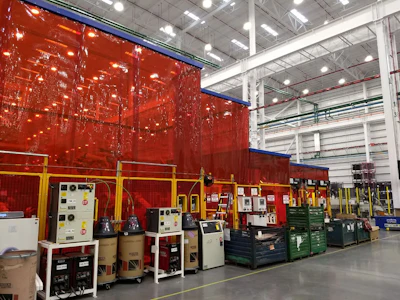
 Before: Processes such as cutting, grinding, welding, mixing and material handling often create localized emissions.RoboVent
 After: Capturing contaminants directly at the source reduces exposure more effectively and minimizes the spread of pollutants.RoboVent
Taken together, these steps help manufacturers move beyond a compliance-only mindset. Working with a qualified air quality engineering partner can help ensure controls are properly designed, applied and sustained over time.
By investing in air quality strategies that support comfort, performance and health, manufacturers can reduce friction on the factory floor, make better use of limited labor and position themselves as employers of choice for the next generation of skilled workers.
Rick Kreczmer is the president of RoboVent, a company that manufactures, installs and maintains industrial dust collectors and air filtration systems. For more information, visit www.robovent.com.