Many manufacturers view industrial parts washing as a secondary or supporting process rather than an essential step in achieving quality finished components. Too often, these manufacturers focus all their attention on processes that directly produce or assemble a component, rather than on secondary operations such as welding, oxidizing or painting.
Unfortunately, this mindset creates serious downstream problems, such as parts that fail to meet quality specifications, coatings that fail to adhere/bond correctly and welds that are completely compromised. To avoid such production catastrophes, parts washing systems – particularly automated systems - are a must, not an option.
Avoid Costly Mistakes from Chips and Contaminants
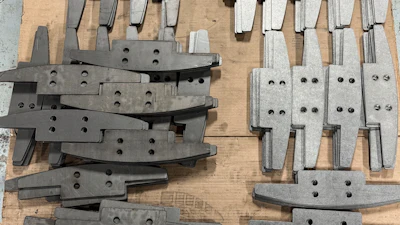
During machining and fabrication processes, components accumulate chips, cutting fluids, oils and other contaminants that remain on their surfaces. This is why every machined part must pass through an industrial parts washer for chip removal before proceeding to the next stage of production.
For example, welding requires clean contact surfaces for proper fusion. Contaminants trapped between parts prevent welds from adhering correctly, leading to defects that compromise the strength and reliability of the finished product. Similarly, painting or powder coating requires a clean substrate to ensure coatings adhere uniformly and maintain their finish over time.
Parts that are not thoroughly washed directly result in coatings that peel, blister or fail prematurely, costing businesses money, quality and valuable production time. In industries where durability and appearance matter, such as automotive or aerospace manufacturing, such a risk is unacceptable.
Achieve Better Consistency with Automated Parts Washing
Some manufacturers hold a “what we’re already doing is good enough” mentality when considering automated parts washing and, depending on production volume, this statement might be true. However, for most facilities, this couldn’t be further from the truth.
Automated parts washers provide repeatable cleaning cycles that ensure every part receives the same level of treatment. This consistency is essential for manufacturers that must meet quality standards or supply parts to highly regulated industries, such as automotive, aerospace/defense and oil & and gas, where the production volume is high, the restrictions are tight and the requirements are strict.
For instance, consider a car engine component. If not completely washed and correctly finished, that component could cause significant and costly damage. In the case of an aerospace component, the consequences could be much more catastrophic.
Reliable cleaning processes ultimately translate to better product quality and fewer surprises later in the production process.
Shorten Return on Investment (ROI)
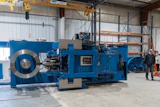
Modern industrial parts washing systems, such as those from ALMCO, quickly demonstrate their value. In most cases, the ROI becomes clear after only a handful of production cycles.
Automated parts washing systems help eliminate contamination-related defects, ensuring parts consistently meet cleanliness standards before moving to the next operation. This reduces the likelihood of failed welds, poor coating adhesion and other finishing issues that require a complete rework, costing manufacturers both time and money.
By contrast, automated parts washing systems require minimal operator involvement. As a result, operators are free to focus on machining, assembly or other operations that require their direct attention.
Leverage a Partner Who Supports the Automation Transition
Manufacturers take a significant step when they incorporate new equipment, especially when it involves automation and the introduction of a new process.
To ensure a seamless, successful transition, manufacturers look to experienced OEMs.
For example, before installing a new machine, look for companies with engineers who work directly with manufacturers to evaluate their production environment and determine the most effective washing solution. They can assess part sizes, contamination levels and throughput requirements, then recommend equipment that fits a facility’s specific needs to maximize the manufacturer’s investment.
Once the equipment is installed, your experienced partner should provide on-site support and training to help operators run and maintain the system effectively. This hands-on approach helps manufacturers quickly integrate the new equipment into their production workflow.
Industrial parts washing functions as the foundation for successful secondary operations. Without it, welding, painting and coating processes simply can’t achieve the results they need to function correctly.
While it may not always receive the same attention as primary operations, industrial parts washing is a critical link in the manufacturing chain. For fabricators looking to improve product quality, reduce rework and maintain consistent production standards, investing in a reliable parts washing system may be one of the most impactful decisions they can make.
Chad Schafer is the Senior Account Manager for ALMCO. For more information, visit www.almco.com.