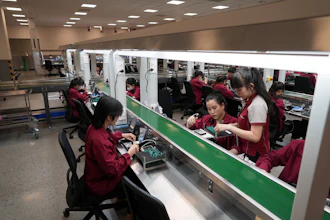
Even as manufacturers invest in automation, new technologies and reshoring production to the U.S., one challenge persists: attracting and retaining workers for entry-level jobs.
A 2024 study by Deloitte and The Manufacturing Institute projects that U.S. manufacturers could need 3.8 million new workers by 2033, with nearly half of those roles at risk of going unfilled if current labor gaps persist.
Demographics are also working against manufacturers. A significant share of the industry’s experienced workforce is nearing retirement age, while fewer younger workers are entering production roles.
With a shortage of Americans willing to take unskilled entry-level jobs – think production helpers, packers, feeders and warehouse workers – and the high turnover that typically plagues those positions, how can manufacturing companies hire and retain the employees they need to keep their businesses running smoothly?
Foreign nationals seeking permanent residency in the U.S. are often eager to find employment stateside as part of the green card process. Many international students on F-1 visas and other foreign nationals seeking permanent residency are willing to take entry-level manufacturing roles that many companies struggle to fill, gaining valuable experience while building long-term careers.
Meanwhile, employers that sponsor these workers often gain motivated employees with strong long-term potential. Many manufacturers find they are hiring highly educated individuals into entry-level roles who can grow within the organization after learning the business from the ground up.
One approach some manufacturers have used to address workforce shortages is employment-based immigration.
Many manufacturing leaders are still unfamiliar with the EB-3 visa program and how it works. It is a longstanding government program established in 1990 to help employers fill positions that remain difficult to staff while providing immigrants with a pathway to permanent residency in the United States.
When manufacturers need entry-level workers, they are often forced to recruit them away from another company at slightly higher wages, only to invest time in training and risk losing those employees again to another employer. By contrast, workers participating in employment-based immigration programs are often motivated by longer-term career opportunities, which can lead to a more stable workforce.
Food packaging companies, in particular, have used EB-3 visas to supplement their workforce, but the program is available to any employer with entry-level openings. Under the EB-3 visa program, foreign workers can fill these roles on a permanent, full-time basis, and Congress allocates approximately 10,000 visas each year for this category.
For manufacturers interested in sponsoring workers through the EB-3 program, the process involves several steps with the U.S. Department of Labor designed to ensure that U.S. workers are given the first opportunity to fill the role.
Employers first request a “prevailing wage” determination from the Department of Labor, which sets the typical pay range for that type of job in a given area.
They must then advertise the position and document that no qualified U.S. applicants were available to fill the role.
Once those steps are completed, the employer files a labor certification application with the Department of Labor as part of the immigrant visa sponsorship process. Approval rates are generally very high when the required steps are followed.
Where do manufacturers find potential employees? More than one million international students already live in the U.S. on F-1 visas. These students have been vetted by the U.S. Department of State and the U.S. Department of Homeland Security and entered the country legally. For many who hope to remain in the United States after completing their education, the EB-3 visa and the opportunity to build a career within a manufacturing company can present an attractive path forward.
Taking a longer-term approach to entry-level hiring through employment-based immigration programs offers manufacturers a way to stabilize their workforce. For companies struggling to fill production roles, programs such as the EB-3 visa can provide another pathway to building a more stable workforce.
 Tom Kilby, Vice President, EB-3, VanteoVanteo
Tom Kilby spent more than two decades managing operations for a paper products manufacturer and is now vice president, EB-3 at Vanteo.