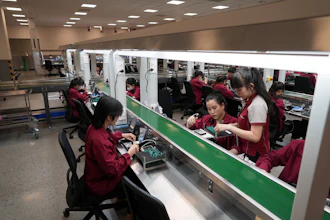
If a major supply chain shock occurred tomorrow, over half of global (53%) CEOs in the manufacturing sector say their businesses could not maintain day-to-day operations for up to three weeks uninterrupted, according to new research from Proxima.
Meanwhile, 80% believe that up to a fifth of their revenue would be in jeopardy if their top three suppliers were disrupted for two weeks. A fifth put the risk at 21%-40% of revenue.
“In a multi-threat environment, ranging from extreme weather events to tariff wars, the manufacturing sector sits firmly in the eye of the storm,” Proxima Executive VP Simon Geale said. “As supply chains become increasingly globalized, disruption in any part of the chain can have a significant, knock-on impact on manufacturing businesses.”
Paying a premium for resilience
Proxima’s Global Supply Chain Resilience Outlook, based on a survey of over 500 global CEOs at businesses generating over $500 million in annual revenue, also found that the 367 CEOs in the manufacturing sector would accept an average uplift of 16% on their current third-party supplier costs to guarantee supply chain resilience. Nearly 70% would accept an uplift of 11% or more.
When asked how they might fund such an uplift in their third-party supplier costs, 40% indicted they would implement cost saving measures, while 34% would pass price rises on to customers. Over a quarter said they would absorb the costs through reduced margins.
A varied threat landscape
When asked which threat currently poses the greatest financial challenge to their supply chain, 23% of CEOs in the manufacturing sector cited conflict and geopolitical tensions. When asked about the impact of protectionist policies in the past 12 months, 43% said that delays at customs have created periodic stock shortages.
The research also found that emerging technologies (22%) and sustainability targets and regulatory requirements (21%) are the top threats that CEOs believe their peers underestimate most.
Technology and cyber risk in supply chains
Over four in 10 (44%) CEOs in the manufacturing sector said their business had experienced a supply chain disruption caused by a cyber incident in the past 24 months. At the same time, 40% said significant business revenue would be at risk within their organization if a key supplier fell victim to a cyberattack.
Despite this, the data found that the majority of CEOs do not have real-time visibility on cyber risk. Less than four in 10 (39%) have conducted a full cyber resilience stress-test across critical suppliers in the past 12 months, while just 35% believed their business has real-time visibility into the cyber risk exposure of its critical suppliers.
Over half of CEOs in the manufacturing sector said AI is delivering measurable value in supplier risk monitoring. However, they also said there are barriers in further scaling AI use in the supply chain including data quality (38%), lack of skills (30%) and clarity around ROI (30%).
“Amid this volatile backdrop, robust contingency planning is now a necessity for manufacturers,” Geale said. “In practice, this means diversifying suppliers, building regional capacity and using data to detect pain points as they emerge. At the outset, however, firms must develop a holistic view of their operations and dependencies, which requires a proactive approach to risk management.”
Proxima, part of Bain and Company, is a procurement and supply chain consultancy headquartered in London. The company serves clients in the UK, Europe, North America and the Asia Pacific region.
The research was conducted by Censuswide, among a sample of 515 CEOs, including 367 in the manufacturing sector, from businesses generating over $500 million in revenue across the U.S., UK, Australia, Singapore and Germany. The data was collected between April 21-27, 2026.