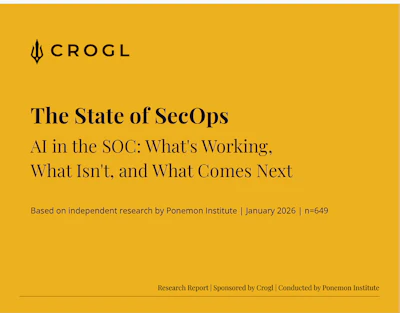
The report, based on research by the Ponemon Institute for Crogl, the "alert crisis," as organizations receive an average of 4,330 alerts daily but only investigate 37 percent of them. This gap stems from the volume of alerts, as opposed to a desire to investigate potential threats.
Key findings from the research include:
- Human analysts (52 percent effectiveness rating) remain superior to AI alone (44 percent ) as a final line of defense. This reinforces AI's role as one of support, as opposed to autonomous control.
- The top deployment barriers are difficulty integrating AI into workflows (50 percent) and dispersed, hard-to-normalize data (49 percent).
- Consistency is an operational requirement, with 63 percent of practitioners demanding predictable AI behavior to maintain trust.
- 61 percent are highly concerned that third-party vendors might use sensitive security data to enrich their own AI services.
- 45 percent of SOC environments are air-gapped, making self-hosted, isolated AI deployment a necessity rather than an edge case.
- Attackers are already utilizing agentic AI to autonomously navigate kill chains. To counter this, defense must also become agentic—utilizing AI that reasons across data in real time while keeping human analysts informed and in control.
To download the full report, click here.