Cyberhaven has announced the launch of Agentic AI Security to address the rapid rise of shadow agents. This latest solution combines visibility, observability, and control to help security teams proactively govern AI systems operating on endpoints across the enterprise and unlock the potential of agentic AI.
AI is rapidly shifting from chat-based tools to autonomous agents operating on endpoints. These agents are being rapidly developed, widely adopted, and given increasing levels of access to data and systems. This is unlocking increases in productivity, but also introducing a new and largely unaddressed security challenge: shadow agents – AI systems operating outside enterprise visibility and control.
While enterprises have begun implementing governance for chat-based AI tools, those efforts have not kept up with the meteoric rise of AI agents. According to recent research by Cyberhaven Labs, enterprise adoption of endpoint-based AI agents has grown by 276 percent over the past year, more than triple the growth rate of GenAI SaaS tools, signaling a swift shift toward autonomous systems that operate outside traditional security controls.
Meanwhile, adoption of endpoint coding assistants more than doubled in 2025, jumping from 20 to 50 percent.
“AI is no longer just generating content, it is executing work,” said Nishant Doshi, CEO of Cyberhaven. "These agents have access to data, tools, and systems, operating with a level of autonomy the industry hasn't seen before. Yet most governance programs still focus on what users type into AI, not on what AI agents are actually doing. Security can't operate after the fact. It needs to operate in real time, at the point where AI is taking action."
This represents a fundamental shift in the threat model. To address this shift, Cyberhaven is expanding its unified AI & data security platform to secure autonomous agents at the endpoint, and it's built around three pillars:
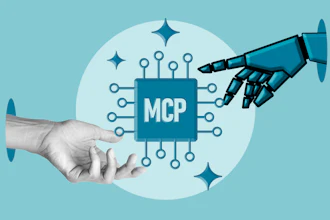
- Visibility – discover and inventory AI agents, MCP servers and connections operating on endpoints.
- Observability – monitor how agents behave, including data access, tool usage and execution paths.
- Controls – enforce real-time guardrails during execution to prevent data leakage and unsafe or unauthorized actions.
This release looks to define a new category of AI-native data security for autonomous systems, enabling organizations to safely adopt agentic AI while maintaining control over how data is accessed, used and acted upon.