NVIDIA and Eli Lilly said they are building an AI co-innovation lab focused on applying artificial intelligence to tackle challenges in the pharmaceutical industry.
The two companies will invest up to $1 billion in talent, infrastructure and compute over five years to support the new AI co-innovation lab.
Based in the San Francisco Bay Area, the lab will co-locate Lilly domain experts in biology, science and medicine with top AI model builders and engineers from NVIDIA, allowing them to work side by side to generate large-scale data and build AI models that can accelerate medicine development, using NVIDIA BioNeMo as the critical platform.
The collaboration will initially focus on creating a continuous learning system that connects Lilly’s agentic wet labs with computational dry labs, enabling 24/7 AI-assisted experimentation to support biologists and chemists. This scientist-in-the-loop framework aims to enable experiments, data generation and AI model development to continuously inform and improve one another.
The new initiative expands on Lilly’s previously announced AI supercomputer and intends to harness investments in next-generation NVIDIA architectures, including NVIDIA Vera Rubin.
The AI factory Lilly announced last fall will train large biomedical foundation and frontier models for identifying, optimizing and validating new molecules with exceptional speed and accuracy. It will also support new and advanced applications in manufacturing, medical imaging and scientific AI agents.
Beyond drug discovery, NVIDIA and Lilly will explore opportunities to apply AI across clinical development, manufacturing and commercial operations to integrate multimodal models, agentic AI, robotics and digital twins.
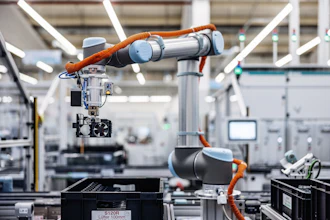
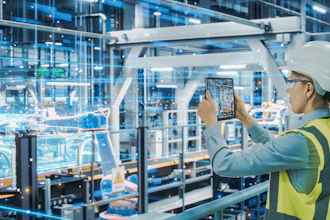
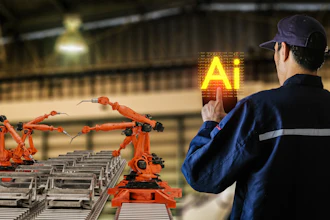
The use of physical AI and robotics in the AI factory will also help Lilly enhance its capacity to manufacture medications and strengthen supply chain reliability. With NVIDIA Omniverse libraries and NVIDIA RTX PRO Servers, Lilly can create digital twins of its manufacturing lines to model, stress test and optimize entire supply chains before making physical changes in the real world.
The lab’s work is expected to begin in South San Francisco early this year.