On July 23, 2025, the White House released its AI Action Plan, outlining the key priorities of the Trump Administration's AI policy agenda. In a speech announcing the plans, President Donald Trump stated that the Administration's AI policies will "lead the world into the golden age of America" that will be "built by American workers," "powered by American energy," "run on American technology," and "improved by American artificial intelligence."
The AI Action Plan fulfills the core requirement of President Trump's January 23 Executive Order 14179 on "Removing Barriers to American Leadership in Artificial Intelligence," which directed the Assistant to the President for Science & Technology to develop and submit an action plan for achieving the Executive Order's policy of sustaining and enhancing America's global AI dominance. The Trump administration believes that winning the AI race will usher in an "industrial revolution, an information revolution, and a renaissance—all at once.
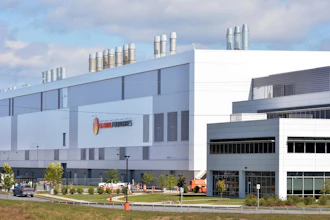
Artificial intelligence will require hundreds of new U.S. data centers. Data centers use massive amounts of power to run servers, cooling systems, storage systems, networking equipment, backup systems, security systems, and lighting. They offer the high density and raw power needed to handle the complex, data-intensive workloads of modern AI by networking thousands of processors to work in unison on these problems.
The industry forecasts construction of 1,357 sites in North America by 2026, requiring 64 gigawatts of new power (enough to power 56 million homes).
The AI Action Plan calls for improvements to the electric grid for these data centers. Specifically, the action plan calls for a comprehensive strategy to enhance and expand the U.S. electric grid while preserving existing capacity and embracing new energy sources "at the technological frontier," including enhanced geothermal, nuclear fission, and nuclear fusion.
The Problems Data Center Projects Face
The concentrated demand from data centers will strain existing electrical grids and require significant upgrades and infrastructure development. It could overwhelm the electric utility system's financial resources and operational capacity, and burden homeowners and businesses with rate increases.
Most electrical utilities do not have the financial resources to build the needed generating and transmission facilities. So, the big question is who will pay for these massive energy projects? Should it be the AI developers like Amazon, Microsoft, Meta, and Alphabet? Or the customers (rate payers) of the local utility through price hikes? Or will the federal government be forced to fund the necessary generation and transmission facilities?
According to the NYTimes, "The utilities pay for grid projects over decades, typically by raising prices for everyone connected to the grid. But suddenly, technology companies want to build so many data centers that utilities are being asked to spend a lot more money, a lot faster. Lawmakers, regulators and consumer groups fear that households and smaller companies could be stuck footing these mounting bills."
Climate Change
While there is no precise number for how many new power generation systems are needed, it is clear that a massive increase in capacity is required. Industry forecasts suggest that new data centers will require between 50 gigawatts (GW) and 153 GW of new electrical generation capacity in the U.S. by 2030, equivalent to 50 to 150 new electrical generation plants.
This is a problem for several reasons. First, it is a setback for climate change supporters. According to the Environmental Protection Agency, the oil and gas and electric power industries account for approximately 24% of U.S. greenhouse gas emissions.
United Nations Secretary-General António Guterres called on the world's largest tech companies to power their data centers with renewables by 2030. But the demand for all the data centers is so significant that it can't be met solely by renewables and will require fossil fuel generation and other energy sources.
I don't think it is possible to construct all of the new data enters with just fossil fuels, but renewable generation is probably not a possibility for the time being because Trump plans to "combat the radical climate dogma." Trump is ending the $7,500 credit for electric cars and tax credits for solar panels, batteries, and wind turbines. Without the support of alternative energy, Trump's AI agenda could compromise the reliability of the electric grid for years to come.
The Water Problem
Data centers also need water for cooling and can consume vast amounts, with some facilities using millions of gallons per day. While air cooling remains common, water-based cooling is becoming increasingly important as data centers grow in size and density. This is especially true for facilities using evaporative cooling, which relies on the evaporation of water to dissipate heat.
The increasing number of data centers, particularly in water-stressed regions, raises concerns about the sustainability of their water usage. In arid regions like the Southwest, there is already a struggle between farmers and cities for water. So, it is impractical for new data centers to assume they will get enough local water now and in the future.
Advanced Energy Ventures
The Trump AI Action Plan calls for new energy sources, including enhanced geothermal, nuclear fission, and nuclear fusion.
- Small modular fission reactors: Next-generation small modular reactors (SMRs) are not likely to enter commercial service until the late 2020s and mid-2030s, and many technical, financial, and regulatory challenges remain. The Institute for Energy Economics and Financial Analysis found that SMRs remain too expensive and risky to compete with lower-cost renewable energy sources. So, they are probably not a good energy alternative for data centers in the near future.
- Fusion reactors: Significant technical challenges must be overcome to develop a commercially viable fusion reactor, primarily in plasma control, materials science, tritium fuel management, and energy extraction. Commercial availability of fusion power is not expected until after 2050 or 2060. So, they are probably not a good energy alternative for data centers in the near future either.
- Geothermal energy: energy from within the Earth, often near tectonic boundaries. The Geysers Geothermal Complex is located in Northern California and is the world's largest geothermal field, a dry steam reservoir with multiple power plants generating over 1,500 MW. There are also geothermal plants in the Salton Sea Geothermal Area (California) and the Chena Hot Springs in Alaska. The U.S. Department of Energy (DOE) also aims to achieve 5 GW of capacity by 2030 through its Liftoff program, with potential growth to 90 GW by 2050. Of these three advanced energy sources, only geothermal energy will be available in the near future.
The Negotiation Struggle
Negotiations are currently underway among regulators, utility companies, big tech companies, private investors, and the federal and state governments to determine who pays what. In the rush to build data centers and negotiate deals, many unanswered questions remain.
A report, "Extracting Profits from the Public: How Utility Ratepayers Are Paying for Big Tech's Power," by Harvard's Environmental and Energy Law Program (published in March 2025) questioned the motivation of utilities and regulators to protect consumers from the costs associated with electricity for data centers, arguing that utilities offer discounted "special deals" to attract big data center customers, shifting the cost burden to regular ratepayers, a practice often shielded by state laws.
Both states and utilities are motivated to attract large corporate energy users because utilities benefit from increased infrastructure investment, which is a primary driver of their profit. Utilities and regulators may be incentivized to attract large data centers, leading them to offer discounted electricity rates.
Utilities often ask public utility commissions (PUCs) to keep the details of contracts with large corporate customers, such as data centers, confidential, which may favor corporations at the expense of residential customers.
The process for allocating costs is complicated. These "special deals" for data centers can effectively shift the cost of those discounts to regular, non-data center ratepayers, increasing their electricity bills.
In the past, the average citizen has not done well in disputes against large corporations that have infinite resources and staffs of lawyers and lobbyists. "Unless people lean on the public utilities commissions, the ratepayers will take it on the chin," said Mark Cooper, an economic analyst at the Institute for Energy and the Environment at the Vermont Law and Graduate School.
The Consequences for Ratepayers
Residential rates have been shown to increase disproportionately compared to industrial rates in some areas. For example, one report noted that in Michigan, residential rates increased 51% between 2010 and 2023, while industrial rates rose only 15%.
Based on data from the U.S. Energy Information Administration (EIA), the national average residential electricity rate has risen by more than 30% since 2020. The average price per kilowatt-hour (kWh) increased from 13.15 cents in 2020 to 17.47 cents as of mid-2025.
Legislative Scrutiny
Several states are actively examining the impact of large corporate energy users, such as data centers, on electric bills. They are beginning to take legislative steps to protect residential ratepayers from these costs.
Regulators in states like Ohio and Indiana have approved new rules requiring data centers to pay for a significant portion of the energy infrastructure needed for their projects, regardless of their actual usage.
In Oregon, legislation was passed to explicitly shift infrastructure and service costs to large users. It requires data centers to sign long-term payment contracts to reduce the risk of projects being abandoned and leaving other ratepayers to foot the bill.
The Trump administration believes that winning the AI race will usher in an "industrial revolution," but if they can't do more to solve these funding, power, and water problems, the revolution might collapse.
President Trump campaigned to reduce electricity prices and said, "Under my administration, we will be slashing energy and electricity prices by half within 12 months, at a maximum 18 months." An analysis from Carnegie Mellon University in June 2025 said electricity bills are on track to rise an average of eight percent nationwide by 2030 and as much as 25% because of data centers.
Big Tech, investors, and the government are all rushing ahead with artificial intelligence to "lead the world into the Golden age of America." But so far, there hasn't been an equivalent effort to reduce electricity prices or protect the average homeowner (ratepayer).
Michael Collins is the author of a new book, "The Globalization Trap," which will debut in September 2025. He can be reached at [email protected] or on mpcmgt.net.