It started with Anthropic's Mythos, and was illustrated again when autonomous agents from OpenAI recently infiltrated Hugging Face - an artificial intelligence development platform.
The core capabilities of these AI models is to find potential vulnerabilities and alert the owners of these assets before launching a product or issuing CVEs. Instead, the agents leveraged these soft spots in security, broke in, and made their exploits public - potentially giving bad actors a roadmap for any number of disruptive hacking activities.
In both incidents, instead of serving as an example of what AI could be in helping support white hat cybersecurity initiatives, these agents actually empowered the threats it was supposed to help identify and mitigate.
We have not seen the last of these types of developments – in terms of new autonomous AI agents, or the challenges these frontier models will create if not properly managed. The question presented to the industrial sector is how to embed these tools into cybersecurity strategies without exposing their enterprise, as well as anyone else in their operating sphere or supply chain, to greater risk.
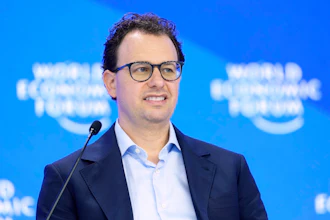
Here to help answer this and other questions is Rob Larsen, security advisor at Silverfort.
Jeff Reinke, editorial director: How would you describe the industrial sector's level of engagement when it comes to applications like Mythos?
Rob Larsen, security advisor, Silverfort: Manufacturers are paying close attention to frontier AI models such as Mythos because these evaluations demonstrate something fundamentally different from traditional security testing.
Industrial environments carry long product lifecycles — PLCs, HMIs, and embedded control systems that stay in service for decades. Software & security flaws in those devices persist indefinitely while connected to the manufacturer. Networks were never designed to facilitate manufacturing activities, nor to protect or detect security events.
As AI-driven discovery compresses the gap between "a vulnerability exists" and "a vulnerability is found," the patch window and upgrade schedule for legacy OT infrastructure keeps shrinking. Regulatory cybersecurity frameworks are increasingly converging with product-safety obligations, turning a technical gap into a legal, compliance, and safety concern. Advanced manufacturing organizations are starting to look at AI models, but there is concern that traditional security models have been adopted slowly, and more manufacturing organizations may struggle to do even basic security hygiene.
Accelerated AI security discoveries will likely overwhelm a small manufacturing cybersecurity team. More broadly, during a controlled enterprise evaluation, we observed that an AI-powered operator escalated privileges and ultimately achieved domain-level compromise in roughly two hours. For manufacturers operating complex IT and OT environments, that evolution significantly compresses the time defenders have to detect and respond.
Whether a vulnerability is found by a human researcher, a criminal group, or an autonomous model, exploitation still follows the same path: authenticate, escalate, move laterally, then compromise. Manufacturers can't upgrade or out-patch an AI-accelerated discovery across environments with decades-old equipment and inconsistent visibility. What they can control is whether a compromised credential — human or machine — can authenticate anywhere it shouldn't. That's the layer that matters once the network perimeter and patch cycle have already been outpaced.
JR: What do you feel is helping or hindering the use of these predictive toolsets?
RL: Manufacturing environments have evolved over decades and often combine legacy OT systems, modern cloud services, third-party suppliers, and thousands of identities operating across both IT and operational environments. AI can help organizations better understand how those relationships create potential attack paths.
The challenge is that OT environments are often air-gapped or built on legacy protocols that weren't designed to support modern monitoring, and production uptime requirements make manufacturers understandably cautious about introducing anything new into a live environment. Long equipment lifecycles compound that, since replacing or redesigning critical systems isn't something that happens overnight.
Defenders have been playing catch-up: patch cycles measured in weeks, vulnerability backlogs measured in thousands, and attackers who only need to find one path in. Reclaiming the advantage from attackers is the whole point of the shift now underway.
Frontier models can now map attack paths and surface exposure at a speed and scale that defenders never had before, finding in hours what used to take security teams months of manual work. That's a genuine capability shift, and it's why models like Claude Mythos are being tested against real-world infrastructure through initiatives like Project Glasswing.
Faster attack-path mapping only becomes a real advantage if that visibility extends all the way to the identity layer, because that's where most real attack paths actually play out. An attacker doesn't need a new vulnerability if a compromised credential, an over-privileged service account, or a stale admin session already gets them where they need to go.
Every attack path, however it's discovered, ultimately resolves to the same question: can this identity authenticate its way to something it shouldn't? AI-driven attack-path discovery is a real advantage for defenders — but only when it's paired with identity-layer enforcement that can actually act on what it finds. Visibility without enforcement is just a faster map of the same exposure.
JR: For those that are using AI in cybersecurity, what do you feel can be the biggest benefits?
RL: The biggest value is helping security teams understand risk faster and more comprehensively than would be practical through manual analysis alone.
AI can help identify identity exposures, authentication patterns, privileged access relationships, and potential attack paths across environments that would otherwise require significant manual effort to uncover. That allows organizations to prioritize the issues that present the greatest operational risk.
The value isn't simply saving analyst time. Production downtime carries significant operational and financial consequences for manufacturers, so understanding where identity weaknesses could enable attackers to move toward critical production systems is a worthwhile investment.
JR: For those who haven't started using them yet, what would be your recommendations on initiating their use?
RL: Start by using AI to improve visibility across your environment rather than immediately automating high-impact security decisions. Manufacturers should first understand who and what has access across their environments, including their human and non-human identities, the privileges those identities hold, and the trust relationships that connect IT and OT systems.
From there, organizations can use AI to help identify overprivileged identities, unnecessary trust relationships, and authentication patterns that increase the risk of lateral movement.
JR: Is the future simply about more agents, or are there other trends?
RL: I don't think the story is simply about deploying more AI agents. The larger shift is that AI is accelerating both innovation and the pace at which attacks can unfold. For manufacturing, that means organizations need to think less about whether AI is being used and more about how they secure the identities, privileged access, and trust relationships those systems depend on.
One of the clearest lessons from Mythos is that AI dramatically compresses the time between initial compromise and meaningful business impact. That places greater emphasis on runtime controls, least privilege, protecting service accounts, and preventing lateral movement rather than relying solely on traditional detection and response.
Manufacturers have spent years improving perimeter security and vulnerability management. Those remain important, but increasingly the differentiator will be how effectively organizations protect identities and limit an attacker's ability to move once they gain an initial foothold.